5 Emails to Have Drafted Before Your Studio Inbox Gets Busy
Most artists have spent years learning how to refine their visual language, mix the perfect palette, and edit a cohesive body of work. But nobody ever sits you down and teaches you how to write the emails that actually sustain a creative practice.
When a gallery approaches you, or a collector asks a difficult question, it’s easy to freeze up. You may stare at a blinking cursor, overthinking every syllable, and feel nervous about sounding awkward or desperate.
The truth is, great opportunities usually slip away not because the artwork isn't ready, but because the communication gets messy.
You don't need a corporate vocabulary to fix this. In fact, art world professionals and collectors respond best to emails that are short, thoughtful, and unmistakably human.
The easiest way to remove the anxiety of the blank page is to have your core frameworks drafted and saved before you actually need them. Here are five essential scripts every studio should keep on hand:
1. Reconnecting with a Gallery After a Long Silence
Whether it's an administrative contact or a curator you haven't spoken to in a year, the temptation is to write an essay apologizing for the radio silence. Don't. Keep it light, own your timeline, skip the heavy explanations, and simply share a brief, focused update on where your work has evolved.
2. Following Up After a Rejection
Getting a "no" from a residency, exhibition, or gallery proposal is part of the job. When you reply, the goal isn't to change their mind—it's simply to leave a lasting impression of professionalism. A tiny, graceful note thanking them for their time keeps the door open naturally for whatever they curate next.
3. Responding to a Pricing Inquiry
When someone asks, "How much is this piece?" answer them directly. It's incredibly easy to overexplain or subconsciously apologize for your pricing. State the title, medium, dimensions, and price clearly. Make the buying process transparent and seamless.
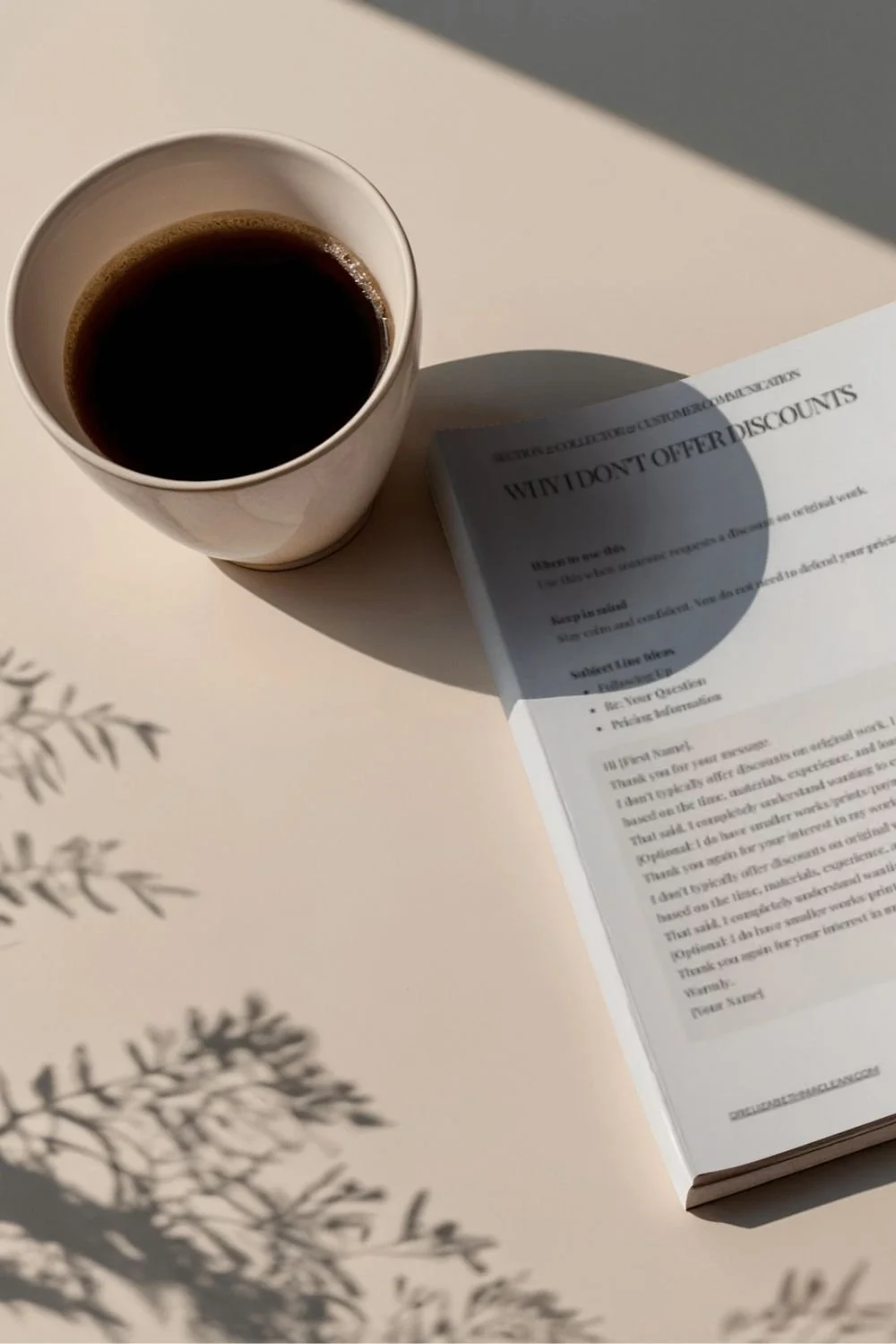
4. Handling a Discount Request
It happens to everyone: a prospective buyer loves your work but asks for a lower price. You don't need to get defensive or write a manifesto defending your worth. Calmly state that you keep your pricing consistent out of respect for all your collectors, then gently pivot them toward your smaller works, prints, or a flexible payment plan.
5. Negotiating a Project Fee
When a commercial client or collaborator brings you an amazing project but offers a tiny budget, you don't have to just walk away or settle for less. Acknowledge the project's potential, state a figure that genuinely reflects your labor and materials, and leave room for them to adjust their numbers to meet you.
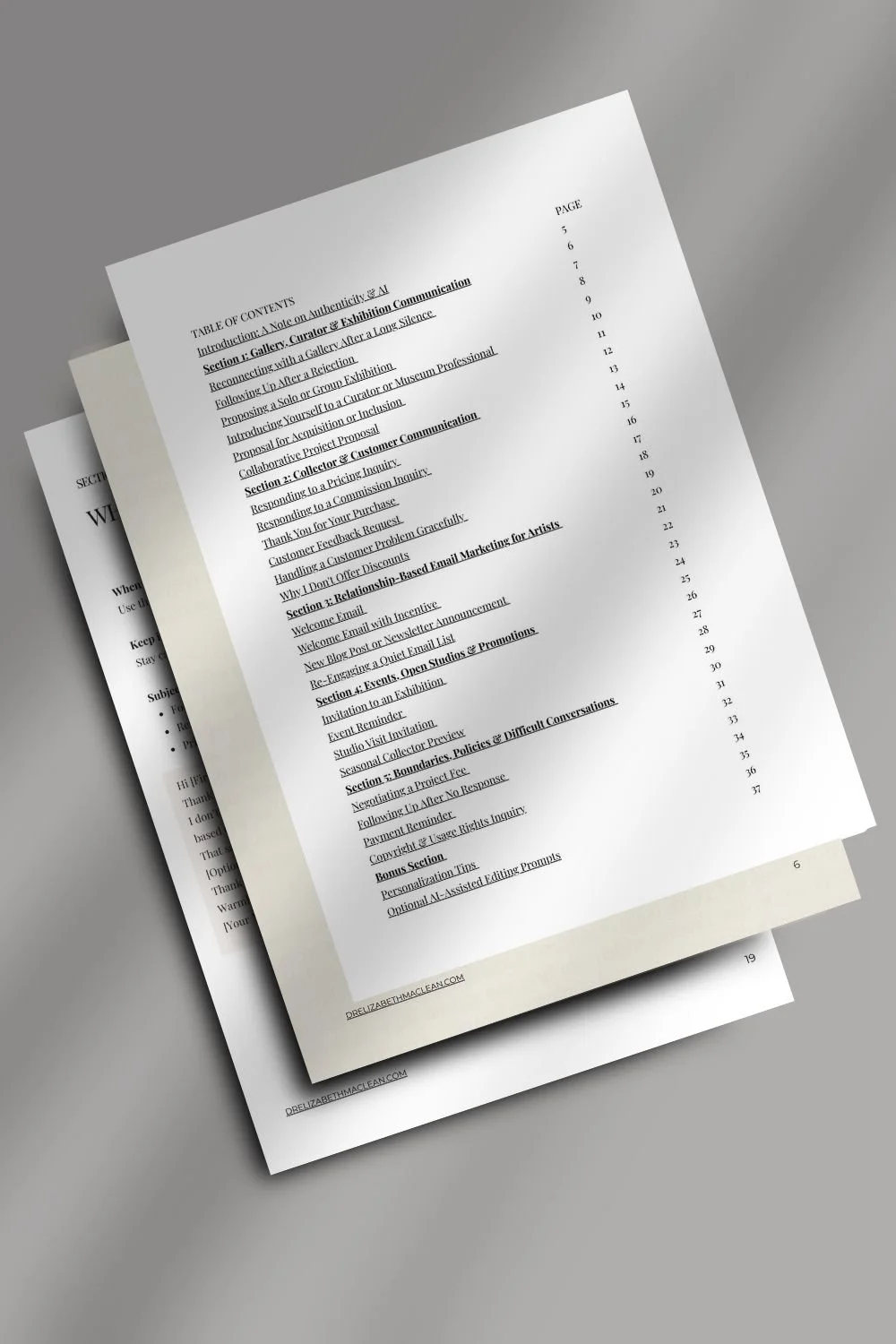
The Artist Biz Communication Bundle
A Quick Shortcut for Your Studio
If you don't want to spend your studio time writing these from scratch, I’ve already done the heavy lifting for you.
I built The Artist Biz Communication Bundle directly from the file named The+Artist+Biz+Communication+Bundle+PDF+Version.pdf.
It’s a straightforward collection of 24 email templates and boundary-setting scripts designed specifically for visual artists, makers, and creative practices. It covers everything from open studio invites to awkward payment reminders and copyright issues.
It’s just a practical tool to help you protect your creative energy and show up confidently in your business relationships.
The PDF Guide ($79): A clean, static copy to keep on your desktop for quick reference.
The Editable Google Doc ($99): A live workspace where you can copy, paste, and tweak the templates directly into your own voice.
👉 Grab your bundle copy right here and clear out your inbox stress.