There’s a particular moment that happens in an artist’s career when you realize you’re no longer making the work you were making when your website was created.
Perhaps your work has become more focused. Your materials have changed. You’ve developed a new body of work—or several. Your exhibitions have become more significant. You’ve found a clearer visual language, or your thinking about the work has deepened considerably.
Maybe you’ve simply grown into the artist you were becoming when you first built your website.
And yet, your website may still be presenting an earlier version of that story.
This happens more often than you might think.
A website is usually created at a particular point in time. We choose the work, write the biography, organize the navigation, launch it—and then get back to making art. Years can pass with only occasional updates.
Meanwhile, the practice continues to evolve.
At some point, the website can become less of a reflection of where you are and more of an artifact of where you’ve been.
Your website is part of your practice's public life
For many artists, the studio is where the real evolution happens.
You experiment. You discard things. You follow unexpected directions. You revisit ideas. You allow the work to become more complicated.
Your website doesn't need to document every stage of that process. But it does need to communicate something truthful about the practice that exists today.
Think of it as the public-facing context for your work.
A curator, gallery, collector, writer, or potential collaborator may encounter your work online before they ever encounter you in person. Your website helps shape that first impression—not just through the artwork itself, but through the way the work is presented and the story surrounding it.
If the website hasn't evolved alongside the practice, there can be a subtle disconnect.
The work says one thing.
The website says another.
Growth doesn't always mean adding more
One of the natural responses to a growing career is to add.
More work. More exhibitions. More press. More pages. More information.
But a more established practice doesn't necessarily require a more crowded website.
In fact, growth can sometimes mean becoming more selective.
You may have enough work now to recognize which pieces genuinely belong together. You may understand which bodies of work are central to your practice and which were experiments along the way. You may have a clearer sense of what you want to be known for.
That clarity is valuable.
Your website should reflect it.
Instead of asking, “How can I fit everything onto my site?”, it can be more useful to ask:
“What do I want someone to understand about my work after spending a few minutes here?”
That question tends to lead to better decisions.
The way you organize your work may need to change
Early in a career, a portfolio might simply be a collection of your strongest images.
That can work beautifully for a while.
But as your practice develops, the relationships between works often become more important. You may have distinct series, bodies of work, mediums, or periods that deserve different treatment.
The challenge becomes one of curation and context.
Should everything appear together?
Should work be organized by series, medium, or year?
Does a particular body of work need more space around it?
Would a short introduction help someone understand the thinking behind the work?
Are there older pieces that are still important to your practice—or are they primarily there because they happen to be on the existing website?
These aren't merely design questions.
They're questions about how you understand and communicate your own practice.
Your accomplishments have probably changed, too
There is another kind of evolution that can be easy to overlook: your professional story.
The biography you wrote several years ago may have been perfectly appropriate at the time. But perhaps since then you've had important exhibitions, received awards or residencies, been featured in publications, entered significant collections, or developed relationships with galleries and institutions.
Your CV has grown. Your bio may not have. And even when the information is technically up to date, the emphasis may still be rooted in an earlier stage of your career.
A website for an emerging artist often needs to establish credibility.
A website for an established artist can assume a certain level of credibility and instead focus on creating a deeper understanding of the work.
That's a meaningful shift.
Your visual identity may have evolved without you noticing
Artists often develop a strong visual sensibility through the work itself.
But the website may have been designed before that sensibility fully emerged.
Perhaps the typography feels generic. Maybe the colors no longer relate to your work. The images might be displayed too small, or the overall design may feel busy when your work has become much more restrained.
Sometimes the problem is simply that the website looks like a website.
Your artwork, on the other hand, looks unmistakably like your work.
A thoughtful website design doesn't need to impose another aesthetic on top of your practice. Ideally, it creates an environment that allows your existing visual language to come through.
The design should support the work—not compete with it.
There’s also a difference between updating and rethinking
This is where many artists get stuck.
You know the website needs attention, so you update the homepage image. You add your latest exhibition. You revise your CV. Maybe you change a few fonts or rearrange some pages.
And for a while, it feels better.
But then you visit the site again and realize that something still isn't quite right.
That's often because you've been updating a structure that was designed for an earlier version of your practice.
There comes a point when the question isn't “What should I change?”
It's:
“Does this structure still make sense?”
A redesign gives you the opportunity to step back and reconsider the whole experience.
Not just how the site looks, but how it works.
What should visitors see first? What deserves emphasis? What can be simplified? What needs more context? How should the different parts of your practice relate to one another?
That kind of thinking can be particularly valuable when your career has reached a new stage.
Your website doesn't have to explain everything
One of the most useful things I've learned from working with creative people is that a website doesn't have to answer every possible question.
There is a temptation—especially when you've accumulated a substantial body of work—to include everything.
But an effective website isn't an archive simply because you have an archive.
It is a curated point of entry into your practice.
The goal isn't necessarily to tell someone everything.
It's to give them enough clarity, context, and visual experience that they want to keep looking.
For an artist, that can be a powerful distinction.
So, has your website caught up?
If your work has evolved significantly over the last few years, it may be worth looking at your website as though you've never seen it before.
Ask yourself:
Does this feel like the artist I am today?
Does the site reflect the work I most want to be known for?
Does the way my work is organized still make sense?
Does my visual identity feel connected to my practice?
Does my biography tell the story of where my career is now?
Am I proud to send this link to someone who is encountering my work for the first time?
Does the overall experience feel as considered as the work itself?
You may discover that your website doesn't need a complete overhaul.
Or you may realize that you've been trying to bring an outdated framework along with you for quite some time.
Either way, it's useful information.
Because your website isn't supposed to be a permanent record of the artist you were when you first built it. It should be a thoughtful expression of the artist you've become.
And sometimes, giving your website the chance to evolve is simply another way of acknowledging how far your practice has come.
You may also be interested in this post: “7 Signs You've Outgrown Your Artist Website?” Read it now →

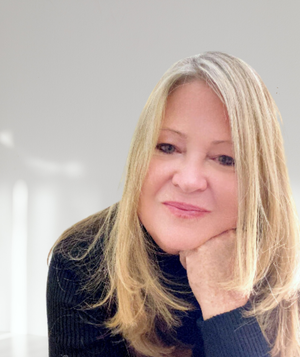
Dr. Elizabeth MacLean
A little about me
I design custom websites for visual artists whose practices have evolved—and whose online presence needs to catch up. I bring together strategy, thoughtful design, and a deep respect for the work to create websites that feel clear, distinctive, and true to where an artist is now.
If your work has grown but your website still feels like an earlier chapter, I'd be happy to talk with you about what might be possible.